Understanding and modulating hepatic macrophage functionality in MASLD
Summary
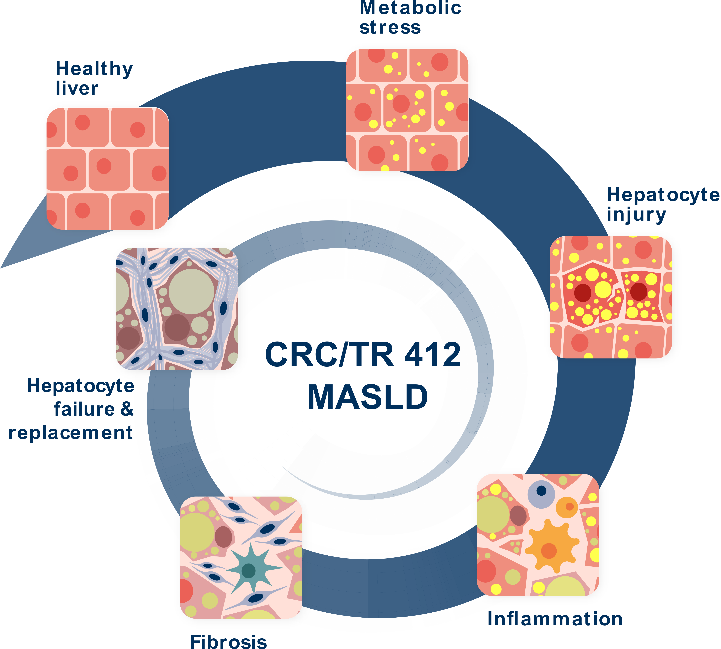
Liver macrophages are central in the pathogenesis of metabolic dysfunction-associated steatotic liver disease (MASLD). We will characterize the phenotypic, spatial and functional heterogeneity of macrophages including cell-cell interactions and identify targetable ligand-receptor pairs.
Our findings will provide a comprehensive picture of how hepatic macrophage subsets contribute to altered metabolism, inflammation and fibrosis in MASLD and opportunities for novel therapeutic strategies.
“Macrophages are not simply bystanders in MASLD — they decide whether the liver resolves injury or progresses towards fibrosis.”
Frank Tacke, Principal investigator B02
Research objectives
- Characterize the phenotypic and spatial heterogeneity of hepatic macrophages in human MASLD.
- Identify targetable ligand–receptor pairs between macrophages, hepatocytes and stellate cells.
- Test functional modulation of candidate pathways in mouse models and liver-on-a-chip systems.
Key methods
- Single-cell RNA sequencing of human liver biopsies
- Spatial transcriptomics and multiplex imaging
- Macrophage–hepatocyte co-culture on liver-on-a-chip